

About data centres
What are data centres?
What do they do?
Data centres support:
What are data centres?
What do they do?
Everyday apps, powered by data centres.

Data centres & the energy transition

Data centres in everyday life

Where the cloud really lives
Do we need more data centres?
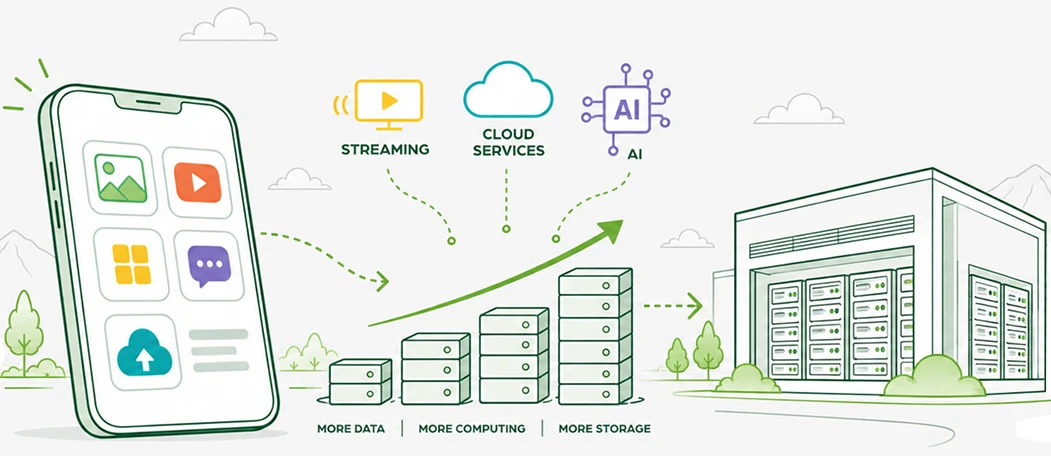
Data centres have been around for decades, but the amount of data we create, store and process has changed enormously. Remember when megabytes of storage on your phone felt like enough? Today, we expect gigabytes for thousands of photos, videos, apps and messages, often backed up to the cloud. The same shift is happening all around us. We’re streaming more, storing more online, using more digital services and increasingly using AI. But this growth in digital technology is about more than how we use it day to day. It’s also helping businesses work more efficiently, accelerating research and scientific discovery, and enabling new technologies and services across areas such as healthcare, energy, and transport.
All of that computing and data has to be processed and stored somewhere. As our demand for digital services, cloud computing and AI grows, so does our need for data centres. Ultimately, their growth is being driven by the way we use technology every day.
Why do data centres use so much electricity?
Data centres are the trains of the digital world

DATA CENTRES
Shared infrastructure. Millions of users.
Millions of separate systems
Think of a data centre like a train. A train uses more energy than a single car, but it carries far more people. Data centres work in much the same way, bringing thousands of computing systems together and sharing power, cooling, connectivity, and security.
In the past, much more of our computing was spread across smaller on-premise server rooms and legacy facilities, with individual organisations running their own IT infrastructure. Consolidating this computing into modern, purpose-built data centres allows it to be managed far more efficiently.
So, while data centres require significant power, modern data centres are the most sustainable way to house and manage the computing infrastructure our digital lives depend on. At GreenScale, we take this a step further by prioritising locations with access to abundant renewable energy. And because much of the electricity used by computing is ultimately converted into heat, we design our data centres so this excess heat can be captured and reused for homes, businesses and other local needs.
Do data centres put pressure on the grid?
WORKING WITH ENERGY NETWORKS FOR A STRONGER, CLEANER GRID
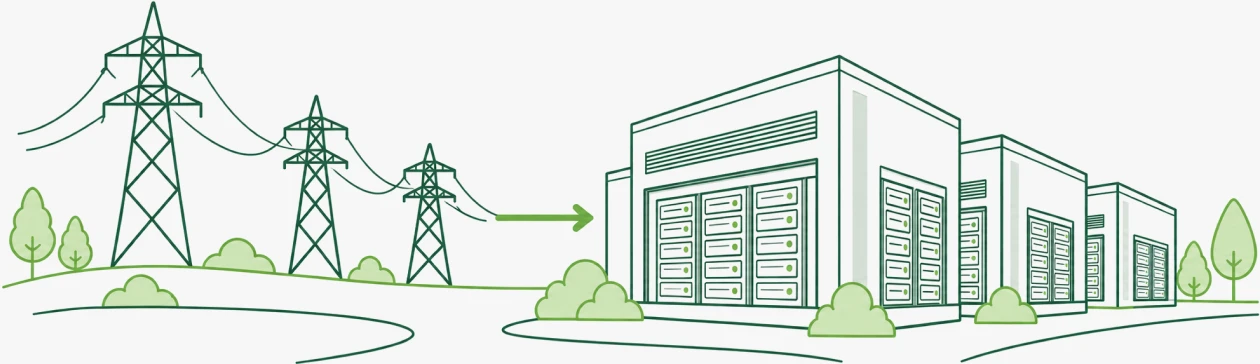
Data centres are large users of electricity, but they don’t have to put additional pressure on the grid. At GreenScale, we prioritise new, power-rich locations, moving demand away from already constrained regions and into areas where it can help strengthen and stabilise local energy systems. This involves investing in grid infrastructure, providing flexible demand and, in areas where renewable energy is abundant but frequently curtailed, putting that electricity to productive use within the country where it is generated. This can help reduce wasted renewable energy, support further investment in clean generation and generate associated tax revenues.
WORKING WITH ENERGY NETWORKS FOR A STRONGER, CLEANER GRID
Do data centres and AI use a lot of water?
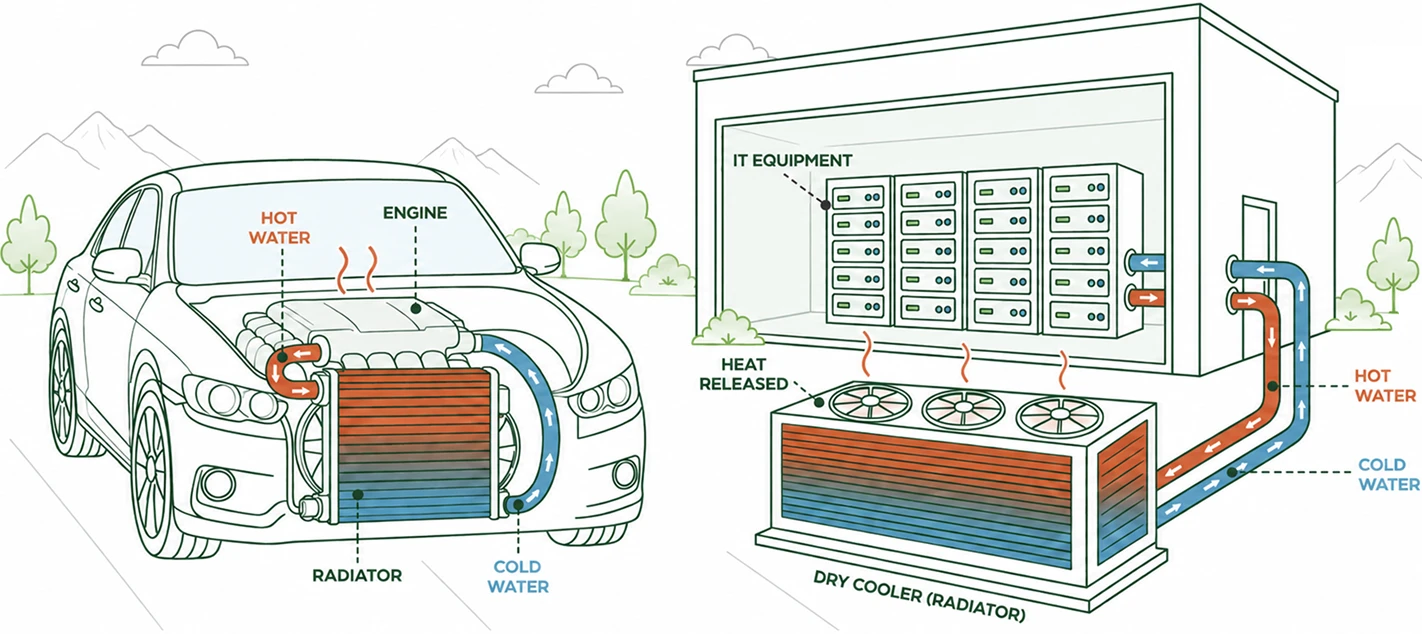
Not all data centres are built equal. Just as you wouldn’t expect a modern, highly insulated house to use the same amount of energy as an older, poorly insulated one, data centres can have very different water requirements depending on how they are designed.
At GreenScale, our data centres do not consume water for cooling. We use dry cooling systems that rely on air to dissipate heat. Water circulates continuously within a sealed, closed-loop system, much like coolant circulating through a car radiator, rather than being continually drawn in and consumed.
Simply put, the only water we consume at our data centres is for everyday human needs, such as washrooms, kitchens and, importantly, keeping our teams supplied with tea and coffee.
What jobs do data centres create?
Data centres create a wide range of direct jobs, both while they are being built and throughout their operational lifetime. Construction requires, builders, electricians, engineers, and project managers, while an operational data centre needs people working across security, IT, finance, engineering, facilities, and management. But the impact goes further. Data centres create indirect jobs through local suppliers and contractors, alongside ripple effects across the local economy as employees and businesses spend locally. All while supporting wider economic growth by providing the digital infrastructure that businesses, research, AI and other technology-led industries increasingly depend on.
Direct impact






Indirect impact

Ripple effects

Are data centres noisy?
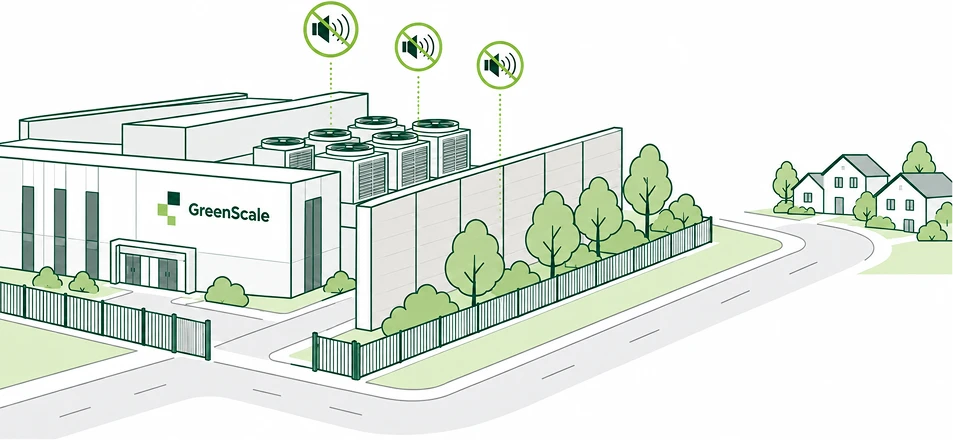
Data centres generate some noise, primarily from cooling equipment and the occasional testing of backup generators. At GreenScale, we design our campuses to minimise noise from the outset, using site layout, building design, quieter equipment and acoustic screening to reduce the impact on surrounding communities. We assess noise levels during the design and planning process and design each development to meet local noise requirements, with ongoing monitoring helping us manage noise once the campus is operational.
Can a sustainable data centre really exist?
Yes. It is absolutely possible to build a sustainable data centre, but sustainability comes down to the choices made from the outset: where it is located, how it is designed and built, how it is powered and cooled, and how it operates over its lifetime.
At GreenScale, we have publicly held ourselves accountable to 12 measurable sustainability commitments, covering energy, water, carbon, biodiversity, communities, our supply chain and more. They set clear expectations for how we develop and operate our data centres, and the impact we aim to have beyond our sites.
View our 12 commitments